Service
Employee engagement ideas, with video and audio
The employee engagement ideas that last give people a voice, show them their work matters and prove that what they said changed something. Video and audio help when they carry real voices from across the company: leaders answering hard questions, colleagues showing their work, updates every shift can hear. Here are practical ideas and what we make.
- Real voices
- Every shift
- Close the loop
- Many languages
What makes an employee engagement idea work, and where does video fit?
Engagement grows from three things people can see: being heard, being recognized for real work, and getting straight answers. Ideas that only add events or prizes fade quickly, because nothing in them changes how work feels on a normal Tuesday. The ideas on this page are built around those three, and each one uses a short piece of video or audio to reach people who would never attend a session or open a long email.
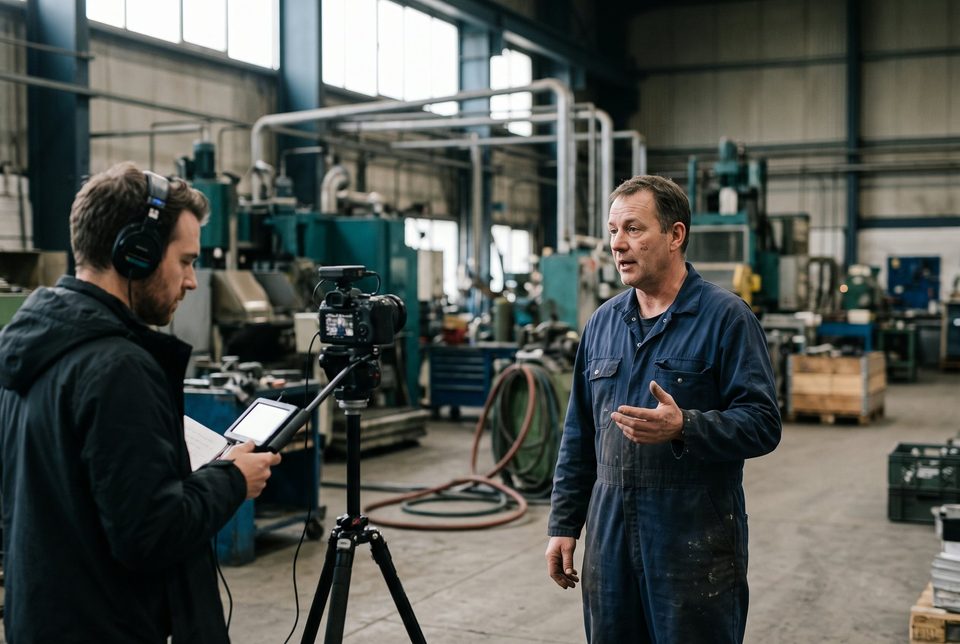
The voice matters more than the polish. A shift lead explaining a new routine in their own words, filmed on a phone and captioned, often lands better than a produced film with a presenter. We plan who speaks first, then choose the format each person is comfortable with: on camera, voice over footage of their work, or audio only. Leaders appear when they have something to answer, not to open every piece.
Reach decides whether an idea works at all. If engagement content only plays on the intranet, the people in depots, stores, plants and vehicles never see it. We make each piece in the shapes your channels need, a captioned video, a vertical cut for phones, a silent version for screens in break rooms and an audio edition, and in the languages your people speak.
Typical uses
- Leader answers to questions employees sent in, anonymously if they prefer
- Showing what changed after an engagement survey, from the people who made the change
- Colleague stories and recognition in their own words
- An audio show hosted by employees, for teams on the move
- Site and team spotlights that rotate across the whole organization
Six employee engagement ideas that use video and audio
- You asked, we answeredCollect questions all month through a form, huddles and managers. A leader answers the most asked ones in a short captioned video, including the uncomfortable ones. Publish the written answers too, so people can check what was said.
- You said, we didAfter a survey, film the people who made each change explaining what they did and why. A colleague who fixed the rota is more convincing than a slide. Be honest about what will not change this year.
- Swap a shiftA colleague from one team spends part of a shift with another and records a short phone clip of what surprised them. It builds respect between functions that rarely meet, such as the office and the warehouse.
- Recognition in colleagues' wordsInstead of a certificate, a short voice or video clip from the colleague who was helped, saying what happened and why it mattered. Specific stories teach the rest of the company what good work looks like.
- An employee-hosted audio showTwo colleagues host a short regular episode for drivers, field staff and shift teams: news, a guest from another site, one question answered. Audio works where screens do not: in vehicles, on foot, on a break.
- Site spotlightEach edition, one site or team shows its work in its own words: the people, the routine, one problem solved. Rotate so every location gets its turn, including the small and remote ones.
What we make
What we make for employee engagement.
An idea plan for the quarter
Which ideas to run, in what order, who speaks in each, and which channels carry them, agreed with you and with the managers who will support it on the ground.
Leader answer and you-said-we-did videos
Short captioned videos that answer real questions or report back on survey changes, with a written version and a vertical cut for phones.
Employee voice pieces
Recognition clips, shift swap stories and site spotlights, recorded with the people themselves or edited from footage they shot, captioned and graded to look like your real workplace.
Audio editions and language versions
An audio master of each piece for private feeds and people who listen, plus versions in every language your teams need, with voices chosen per language.
What you can hold us to
Checked before it reaches your teams.
Standards we apply to every piece, and the commitments we make before you send anything.
- Know how it’s made
We tell you whether each piece uses an AI voice or a human one.
- Reviewed before delivery
Nothing reaches your teams until you approve it.
- Confidential from the start
We agree confidentiality, access to materials and private delivery with you before we start.
Delivery standards
- Consistent loudness
- −16 LUFS for podcast platforms, true peak ≤ −1 dBTP, so episodes don’t jump in volume.
- A master you can reuse
- WAV 48 kHz / 24-bit for future edits and versions.
- Captions for recorded media
- Following WCAG 2.2, criterion 1.2.2, for people watching without sound.
- Checked before delivery
- Technical, listening and script checks on every piece.
Questions
Before you get in touch.
What are good employee engagement ideas for remote teams?
Ideas that create contact without another meeting: a leader answering questions sent in during the month, short clips where colleagues show their home setup or their work, an audio show people can play on a walk, and recognition stories shared in the team channel. Keep each piece short and give people a way to reply.
What engagement ideas work for frontline and shift workers?
Ideas that reach people where they are: audio they can play on a phone, silent captioned video on screens in break rooms, site spotlights that include their location, and recognition that comes from colleagues on the same floor. Schedule anything live at shift changeover, and always offer a recording for people on other shifts.
Is an engagement video better than an email?
Not for everything. Video helps when the voice or the face matters, such as a leader answering a hard question, a colleague being thanked or a change being explained by the person who made it. Keep a written version for reference and search.
How often should we run engagement pieces?
Choose a rhythm you can keep, such as one leader answer video a month and a rotating spotlight each edition of your newsletter. A steady rhythm builds trust; a burst of activity followed by silence does the opposite.
How do we know whether an idea is working?
Watch what people do with it. Are more questions coming in each month? Do managers mention the pieces in huddles? Do colleagues volunteer for the next spotlight? Ask a few people in different roles what they remember from the last piece.
Can you make engagement content in several languages?
Yes. We make language versions of each piece with captions and a voice chosen for each language, so a colleague in another country hears the same message at the same time as everyone else.
What do you need from us to start, and how is it quoted?
A list of the ideas you want to run, who might speak, the channels you use and the languages you need. Footage your teams shot on a phone is welcome. A quote depends on how the audio will be used, the type of use and where it is distributed, the number of languages and the number of voices.
One brief · every team · every language
What’s your next message?
Tell us who it’s for, what you need to communicate and when you need it. We’ll come back with the approach and the scope.
Start a project